
Real Car Rushing
yimjuinCasual
4.3192.00 Reviews
- Version
- 1.1.8
- Installs
- 100.00K
- Age Rating
- Everyone
Screenshots
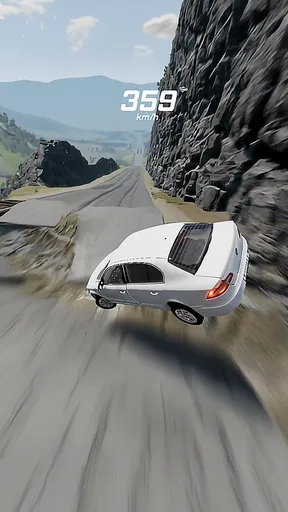
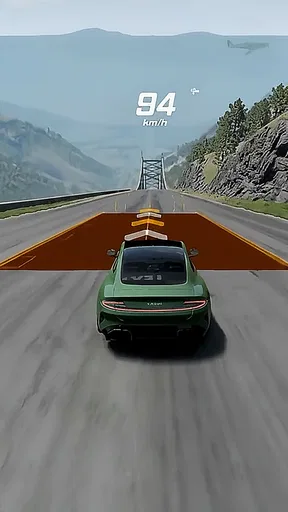

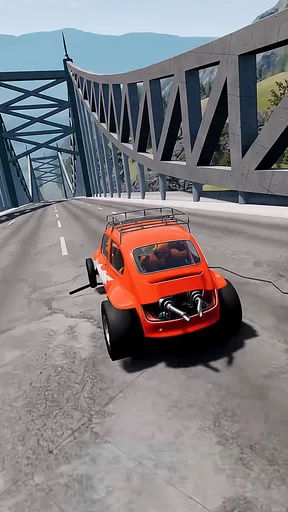


Our Review of Real Car Rushing
 Analysis by Appyee
I tried Real Car Rushing as the kind of game you open when you have a few spare minutes and want immediate movement rather than a long campaign. Its idea is easy to understand: control a car from a third-person view, drag to steer through a rushing challenge, and aim for the target area. That simplicity is its biggest attraction, but it also defines the limits of the experience. This is a casual game from yimjuin, and I found it most enjoyable as a quick shared-device distraction rather than a replacement for a deep racing simulator.
The game is free to play and suitable for Everyone, which makes it an easy candidate for a family tablet or a phone passed between people at home. The important distinction is that an age rating describes suitability, not necessarily how every person will enjoy it. A younger player may appreciate the direct controls, while an older racing fan may quickly want more tuning, track variety, or competitive structure. My recommendation depends heavily on that difference.
How Real Car Rushing Works in a Shared-Device Situation
The most natural household use case is a short turn-taking session. Imagine waiting for dinner, sitting in a living room, or sharing one older phone that is not reserved for a single player. One person can attempt a run, hand over the device, and let someone else try to improve the result. Because the central action is based on dragging rather than a large control scheme, a new player can understand the basic interaction without a long explanation.
That accessibility does not mean every attempt feels identical. Small changes in how I dragged affected how confidently I could guide the car, especially when I was trying to correct direction quickly. In a shared setting, this creates a useful informal challenge: one player may favor cautious movements, while another may take a more aggressive line toward the target zone. The game works best when everyone treats it as a series of quick attempts, not as a serious tournament with carefully protected progress.
I would avoid presenting it as a guaranteed quiet activity for a child. The action is designed around rushing toward a goal, so the appeal comes from motion and urgency. That can be entertaining, but it can also encourage repeated attempts when a player misses. If the device belongs to several people, agreeing on a simple turn order before starting is more practical than assuming the game itself will organize the household.
Another useful point is the device context. A casual title like this can fill the role usually taken by tiny puzzle games or endless arcade distractions, but it asks for more active attention than a passive time-killer. I had to keep watching the car and react to its position. That makes it a better fit for a short break when I want to do something, and a worse fit when I am looking for a game that can sit in the background while I talk.
What the first session tells you
The first session is mainly about learning the relationship between the drag gesture and the car’s movement. I recommend beginning with controlled, shorter gestures instead of immediately sweeping across the screen. This gives a better sense of how much correction is possible and reduces the common mistake of oversteering. It is a small technique, but it matters more here than it would in a turn-based casual game because the action does not wait for you.
I also found it helpful to focus on the target zone rather than simply trying to move as quickly as possible. The store description emphasizes rushing, but speed without direction is not a useful strategy. When I treated the target as the priority and used speed only when the path looked manageable, the game felt less random and more like a test of timing. That is one of the more interesting layers beneath its very simple presentation.
For a child or first-time player, I would explain the objective in one sentence and then let them experiment. Too much coaching can make a casual game feel like homework. For an adult helping a younger player, the better approach is to point out one adjustment at a time: start the drag earlier, make a smaller correction, or look ahead before changing direction. This keeps the shared experience cooperative without pretending that the game offers a formal teaching mode.
Setting boundaries before handing over the device
Real Car Rushing does not become a household-management tool simply because it is easy to start. If several people use the same phone or tablet, the boundaries need to come from the household. I would decide who is allowed to play, how long a turn lasts, and whether the device can be used without asking. Those decisions are especially useful when the game is installed on a parent’s personal phone rather than a dedicated family device.
The free price removes one obvious barrier to trying it, but free access should not be confused with a complete description of the experience. A responsible adult should still check the game on the actual device before giving it to a child, particularly if the device is shared for work, communication, or school. That is not a criticism of this particular title; it is a sensible boundary whenever a game is placed on a multipurpose phone.
I would also keep expectations clear about progress. The supplied facts identify the current version as 1.1.6, but they do not turn the game into a persistent family profile system. I would not promise a child that every attempt will be saved separately or that each household member will have an independent record. If personal progress matters, the safest practical arrangement is to agree on a simple manual method, such as remembering a best result or keeping a note outside the game, rather than assuming separate account spaces exist.
This is one of the places where the game differs from larger racing alternatives. A full racing title often makes its profile structure, career progression, and competitive identity central to the experience. Real Car Rushing is easier to pass around because it does not demand that every player understand a large ecosystem first. The trade-off is that the shared session may feel temporary. It is convenient for casual turns, but less satisfying for a household that wants detailed, separate long-term progression.
Coordinating turns without making the game complicated
A simple rotation works better than trying to create a formal league. I would give each player one attempt, or a small fixed number of attempts, and then pass the device in the same order. This prevents the most confident player from quietly taking over and gives beginners a fair chance to learn the drag controls. It also keeps the pace moving, which suits the game’s short-form character.
For younger players, a cooperative goal can be more enjoyable than comparing every result. One person can watch the route and suggest when to make a smaller movement, while the player holding the device remains responsible for the actual control. This turns the game into a brief coordination activity rather than a test that only rewards the fastest learner. I liked this approach because it gives a second person something meaningful to do without inventing a feature the game does not have.
There is also a practical screen-sharing issue. A third-person view can be easy to follow when the device is held at a comfortable angle, but a crowded room or bright light may make small movements harder to see. I would have the active player hold the device steadily and let spectators comment between attempts rather than during a difficult maneuver. That sounds minor, yet it reduces the kind of backseat coaching that can make a simple game frustrating.
If the household wants a more serious competitive experience, a dedicated multiplayer racer or a game with explicit scoreboards will probably be a better choice. Real Car Rushing’s strength is the immediacy of one person controlling the car. Its weakness, in comparison, is that the social structure has to be created by the players. That is fine for a casual evening, but it may feel thin for friends or siblings who want organized competition.
Age suitability, trust, and realistic expectations
The Everyone rating makes the game broadly approachable, and the basic objective is simple enough for a child to grasp. Still, suitability involves more than whether a player can understand the controls. I would consider patience, impulse control, and the child’s relationship with shared devices. A player who becomes upset after a missed target may need shorter turns and an adult nearby, while a patient player may enjoy experimenting independently.
For parents, the most useful trust exercise is to play the first session together. That lets you see whether the controls are comfortable, whether the pace suits the child, and whether the device remains available for other household needs. It also avoids making assumptions based only on the age label. In my experience, a short joint session tells you more about fit than a general category such as casual gaming.
I would not frame the game as educational simply because it involves timing and coordination. Those skills may appear during play, but the main purpose is entertainment. The honest description is a quick reflex-and-direction challenge that can support informal cooperation when two people share one device. That distinction helps families choose it for the right reason instead of expecting structured learning or a carefully guided progression system.
Trust also means being clear about ownership of the device. If a child borrows a parent’s phone, the child should know that the phone remains available for calls, messages, and other responsibilities. If siblings share a tablet, the turn system should be agreed before the game starts. These rules are not features of the app, but they determine whether the app becomes a pleasant break or another source of arguments.
Where it sits among casual racing games
Compared with a traditional racing simulator, Real Car Rushing is much easier to approach. I did not need to learn a full vehicle setup or commit to a long race before understanding the central action. That makes it suitable for a quick session and for people who enjoy the feeling of guiding a moving car without wanting realistic motorsport detail.
Compared with a conventional arcade racer, its appeal is narrower. Many arcade racers build excitement through selectable vehicles, tracks, upgrades, opponents, or a larger sense of progression. This game’s identity is more focused on the act of rushing toward a target zone from a third-person perspective. If that single idea clicks with you, the focus feels refreshing. If you need constant new systems, the simplicity may become repetitive.
Compared with puzzle games, it demands more immediate physical response and gives you less time to plan. Compared with endless runners, it appears more goal-directed because the target zone gives each attempt a clear destination. Those comparisons helped me understand its best position: it is not trying to be a complete racing world. It is a compact casual challenge built around movement, steering, and reaching the objective.
The public response reflects a mixed but viable reception, with an average rating of 3.6 from around 652 ratings and roughly 91 written reviews. I read that as a reason to keep expectations measured rather than as a warning to avoid it. The game has attracted over 100K installs, so it is clearly easy enough for a meaningful audience to try, but popularity alone does not solve the question of whether its focused design matches your taste.
Small techniques that make the experience better
My first practical tip is to avoid treating every drag as a command to turn as sharply as possible. A smoother movement gives you more opportunity to correct the car before reaching the target. When I used a series of deliberate adjustments instead of one dramatic gesture, I felt more in control. This is especially useful when a beginner is blaming the game for a miss that actually came from an overly large movement.
My second tip is to separate observation from reaction. Before dragging, take a brief look at where the car is headed and where the target sits. Then make the smallest movement that addresses the problem. The game is fast enough to encourage panic, but panic usually leads to extra corrections. This habit makes the title more rewarding for adults and older children who want a little more control without turning the session into a technical lesson.
My third tip concerns shared play: use a neutral device position and keep the same grip from one attempt to the next. If each player holds the phone differently or changes orientation between turns, comparisons become less meaningful. Consistency will not create a formal scoreboard, but it makes household challenges fairer. It also helps a new player understand whether a change in result came from a better technique or simply from holding the device differently.
A fourth insight is that the game is better used as a reset between demanding tasks than as an all-evening commitment. The focused goal gives me a quick mental change of pace, but the limited central idea does not provide the variety I expect from a larger racing game. I would play it during a short break, pass it around after another activity, or use it as a low-setup option when nobody wants to learn complicated rules.
What the current release means for different players
The release date is Jun 4, 2026, and the current version is 1.1.6. For someone deciding whether to install it, those details are useful mainly as a snapshot of the version being reviewed. I would still judge the game by its actual loop: drag, adjust, rush, and try to reach the target zone. A version number does not change the fact that this is a focused casual experience rather than a broad racing package.
It runs on Android 7.0 or later, which gives it a practical place on some older compatible devices. That can matter in a household where the newest phone belongs to an adult and a child uses an older spare device. I would test the controls on that specific hardware before planning a group session, because comfort, screen size, and responsiveness can affect how enjoyable a drag-based game feels. The operating-system requirement tells you compatibility, not how pleasant every device will be to use.
The developer, yimjuin, has kept the concept direct enough that a player can understand it without a long onboarding explanation. That is a strength for shared use: someone can pick up the device and start learning through play. The corresponding limitation is that players looking for detailed guidance, extensive customization, or a strong career framework may find the presentation too light. I would choose it for immediacy, not depth.
My household verdict
After trying it with the shared-device angle in mind, I see Real Car Rushing as a good fit for households that want a free, easy-to-explain car game for short turns. Its third-person perspective gives the action a clear visual focus, while the drag control keeps the entry barrier low. It is especially suitable when one phone or tablet moves between people and nobody wants to create a complicated setup before playing.
I would skip it if your priority is realistic driving, extensive vehicle management, online competition, or a deep progression system. A more substantial racer will offer more reasons to return, and a puzzle game may be better if you prefer calm planning over quick corrections. I would also skip it for a household that expects the app itself to manage profiles, turns, or family coordination. Those boundaries need to be handled by the people sharing the device.
For everyone else, the free entry makes trying it low-risk. Start with a short session, agree on turns, and judge whether the central rushing-and-target loop remains enjoyable after the novelty of the first attempt. My own view is positive but measured: its best feature is not complexity, but how quickly it creates a playable challenge. Used in that role, it is a pleasant casual option from yimjuin and an easy game to recommend to a friend who wants immediate car action without a lengthy commitment.
Verdict
Strengths of Real Car Rushing
- Fast-paced races are easy to start and suitable for short gaming sessions.
- Simple controls make the game accessible for casual players.
- A wide selection of cars adds variety to the driving experience.
- Quick challenges provide an entertaining way to pass the time.
- The game has a lightweight design that should run on many devices.
Limitations of Real Car Rushing
- Gameplay may become repetitive after extended play.
- Some vehicles or upgrades may require significant grinding.
- Frequent ads can interrupt races or menu navigation.
- Limited driving depth may disappoint experienced racing fans.
- Performance can vary on older phones during busy scenes.
Similar Picks in This Category
View All
My Talking Angela
Outfit7 Limited4.2

My Talking Tom
Outfit7 Limited4.3

Pou
Zakeh4.2

My Talking Tom 2: Pet Game
Outfit7 Limited4.3

Candy Crush Saga
King4.6

Bridge Race
Supersonic Studios LTD4.1
Frequently Asked Questions
What is Real Car Rushing?
Real Car Rushing is a fast-paced mobile driving game focused on steering through busy roads, avoiding obstacles, collecting rewards, and trying to achieve the highest possible score. Its simple controls make it easy to start playing, while progressively harder traffic patterns and faster movement add challenge. It is primarily designed for short, casual gaming sessions on Android and iOS devices.
How do you play Real Car Rushing?
Gameplay is based on controlling your car as it moves along the road. Depending on the version and device, you may steer by tapping, swiping, or dragging across the screen. The main objective is to avoid collisions, react quickly to changing traffic, and remain on the road for as long as possible. Coins or other rewards may also be collected during each run.
Is Real Car Rushing free to download and play?
Real Car Rushing can generally be downloaded without an upfront purchase, allowing users to try the core gameplay for free. However, the app may include advertising, optional in-game purchases, or paid items depending on the platform and current release. Before downloading, check the official store listing for the latest information about ads, purchases, and any age or device restrictions.
Does Real Car Rushing require an internet connection?
The basic driving gameplay may work without a continuous internet connection, which makes Real Car Rushing suitable for playing while traveling or in areas with limited coverage. Nevertheless, an internet connection can be required for advertisements, cloud features, updates, leaderboards, or in-app purchases. Availability of offline functionality may vary between versions, so testing the game after installation is recommended.
Is Real Car Rushing suitable for children and low-end devices?
Real Car Rushing uses straightforward controls and an easy-to-understand objective, so it can be accessible to younger players and casual gamers. Parents should still review the store rating, advertising content, and purchase settings before allowing children to play. Performance depends on the device, but users with older phones should check the required operating-system version and available storage before installing.
Play our best games!


